When was the last time you read a book?
Did it feel impossible to get through? Did your mind begin to wander – what’s for dinner tonight, did I respond to that message, when do I have time to workout? Did you give in to your impulses and pick up your phone instead?
It’s okay if you did. It’s not entirely your fault.
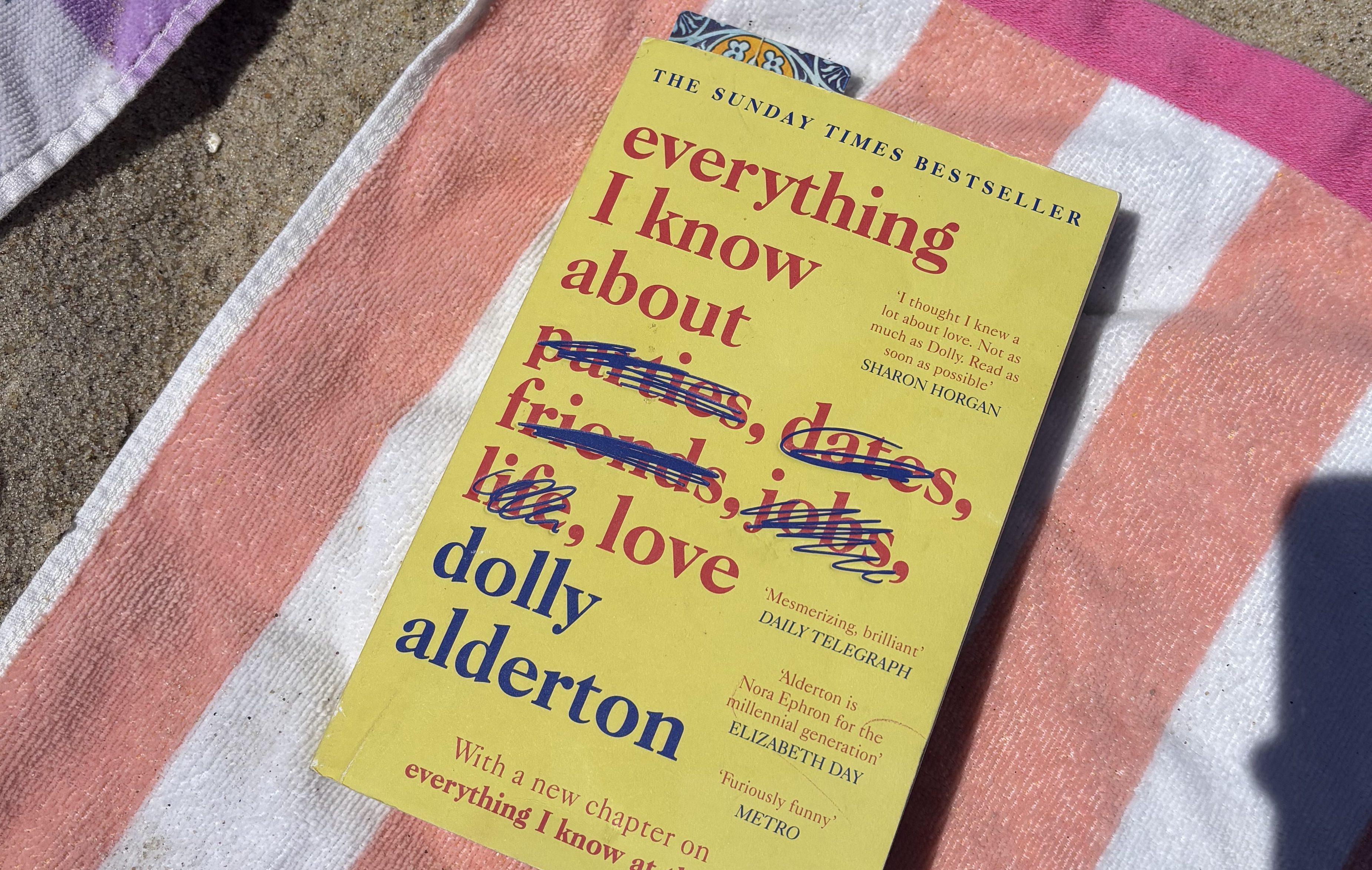
The human brain has changed. I loved to read, my favorite book being Everything I know About Love by Dolly Alderton, a witty, honest, and emotional memoir that reflects on Dolly’s life and how her experiences shaped her idea of love. Whether it was at the beach or on the train into NYC, I loved having a different world packed into a well-loved, scratched-up paperback in my bag. The last time I finished a book was six months ago. Why is that?
With today’s digital landscape and constant noise, our brains have adjusted to all the quick, mindless content we consume, changing how we focus and what we choose to consume. According to an American Time Use Survey, referenced in Stolen Focus, around 57% of Americans now do not read a single book in a typical year. All this short-form content consumption, paired with the lack of long-form content consumption, is creating an inability to focus and it isn’t just changing what we consume, but how we think.
Reading = Empathy
Tackling an entire book, a couple hundred pages of rich plot and characterization, is a commitment. To sit with an understand a work for that long requires total and utter concentration. Not only does reading improve our focus, but it also surprisingly improves our empathy.
Johann Hari, author of Stolen Focus, describes fiction as “a kind of empathy gym,” arguing that it is one of the richest forms of focus we have. As we read, we follow a story, but we are also inside a character’s head, experiencing their thoughts and emotions. Over the duration of a book, we learn to understand them and their actions without being quick to judge, increasing our empathy.
Yet, short-form and screen-oriented reading habits push the opposite of that. Michael Harris, writer behind I’ve Forgotten How to Read, testifies, “Book-oriented styles of reading opened the world to me – by closing it. And new, screen-oriented styles of reading seem to have the opposite effect: They close the world to me, by opening it.” Digital life breeds a different style of reading, one that makes us cynical and judgmental. Another video, comment, or notification is waiting for us – all we have to do is feed into it. With an endless stream of content and information that is begging to be consumed, our attention becomes fragmented, never solely focused on one thing, and always looking for the next ‘experience’.
What Does This Do to Empathy?
A fractured attention is greater concern than a focus issue.
Hari writes, “If you see the world in fragments, your empathy often doesn’t kick in, in the way that it does when you engage with something in a sustained, focused way.” That is exactly what social media does. If you watch a 15-second video stating a controversial opinion and open the comment section, everyone has already jumped to add their own opinion, without reading into the context. All within 15 seconds. It’s ironic, because when those 15 seconds are over, you scroll, and 15 seconds later, you’ve forgotten about it entirely.
Social media doesn’t necessarily make us rude, cruel, or less empathetic. As we know, social media was designed for connecting us. The concern is when our attention is fragmented and scattered, we stop taking time to understand and process what we are seeing before forming and voicing an opinion.
Boredom Isn’t the Issue
CNN’s Madeline Holcombe’s piece, The boredom scroll on socials may be making your problem worse, study says, made me consider my relationship with my social media. In the slightest moment of boredom, I reach for it, for comfort and stimulation. Waiting in line? Scroll. Commercial break? Scroll. Walking to class? Scroll.
Boredom isn’t a bad emotion; it’s natural, and you should allow yourself to feel it.
Dr. Katy Tam, referenced in Stolen Focus, explains that “enjoyment often comes from engaging with the content rather than swiping through it.” Our society pushes constant consumption, to the point that sitting with one thing can feel boring or tiring.
Let Your Mind Wander
Surprisingly, mind-wandering is beneficial for thinking.
Hari points out that when you look back at technological or scientific breakthroughs, “many of those great breakthroughs didn’t happen in a period of focus, they happened during mind wandering.” When you take a step back from an intense focus and float through your mind, you’ll be surprised what you find.
Many of us face obsessions with constant productivity, I know I do, and it restricts me from ‘wasting time’ and truly allowing my mind to wander. David Robson of the Guardian comments on flow, that flow similarly explains that we reach flow when we find the right balance between our abilities and the challenge in front of us.
What are we losing and how do we stop it?
Constant scrolling doesn’t mean we forget how to read or finish a book.
It does imply that we are losing our ability to sit long enough with a text, work, or idea to truly understand it. If we can’t process a work that consumes more than 30 seconds of our time, how are we going to understand each other’s complex emotions – a fundamental point of humanity and community?
Hari writes, “Every time you widen human empathy, you open the universe a little more.”
Widening our universe, and the collective universe, starts by picking up a book.


Leave a Reply