I’ve written a lot about the reasons why our collective attention is slipping, and how we can recover it, but that isn’t possible if we don’t address the biggest stressor: stress.
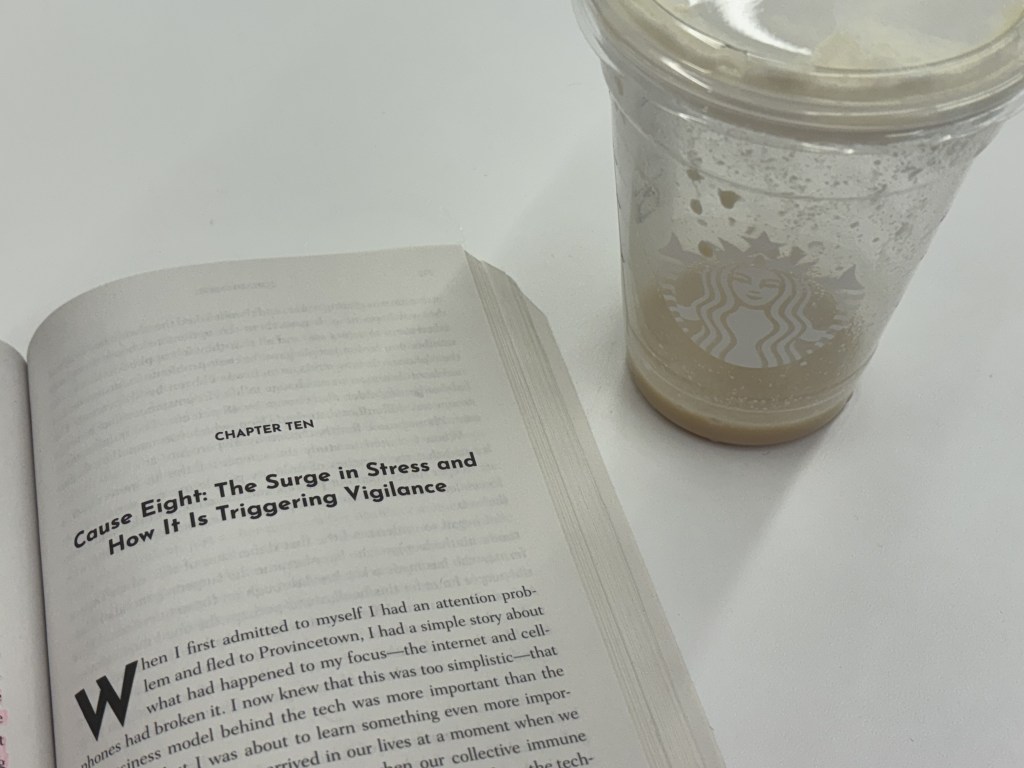
So, we’ve discussed the greater system at large, cruel optimism and our own willpower, and social media’s addictive nature. We know we can make individual changes that allow us to reclaim our focus and time, but more importantly, we know we must break down the harmful system at play to truly reclaim our attention. To improve our ability to focus, we have to attack that system, the one that contributes to chronic stress, sleep deprivation, financial hardship, and digital distractions. When we change those practices, we can create conditions that promote healthier screen habits and better our sustained attention.
Stress & Attention’s Relationship
We can intertwine Johann Hari’s work and research from Stolen Focus into the argument.
Hari explores how our declining attention spans are a result of modern life’s growing societal pressures. The rise of the internet in the 90s, coincided with the collapse of the middle class, rising economic insecurity, and declining sleep habits, leaving people at extremely vulnerable states to experience stress and distraction.
At this point, everyone is aware that technology is a huge culprit for our inability to focus, but it’s not solely to blame. When we’re overwhelmed by financial struggle, aren’t sleeping enough, and constantly stressed about our futures and the world around us, we can’t properly focus.
A Pew Research article, Psychological Stress and Social Media Usage, states that, “There is more information flowing into people’s lives now than ever — much of it distressing and challenging.” Social media gives us a space to connect and find community, but it is always flowing, and that means it pushes distressing news about our governments, wars, climate crises, and everything else that induces stress. Seeing those things make me feel hopeless, and then imagine if it’s directly effecting you. That would induce a lot of stress wouldn’t it.
Finding Leverage Points
A leverage point is the place within a complex system where a small shift in one thing can produce bigger changes in everything.
In a Donna Meadows Project article, Leverage Points: Places to Intervene in a System, Meadows explains that “leverage points are points of power”, and can be used when correcting broken systems, systems that need to be designed for the public good. Instead of treating the symptoms of the problem, we should identify the structure that caused it. So, when we approach the attention crisis, we blame it on the individual, telling them to disconnect, spend more time outside, and practice mindfulness. Yes, doing all of that does help, but placing the responsibility on just the individuals doesn’t achieve much. Tech companies are continuing to design platforms that capture our attention, “fixated on economic growth as the answer to virtually all problems”, workplaces push for constant productivity, and financial burdens leave individuals stressed out more than ever, with less time to properly rest.
When productivity and profit are the priority, our creativity and attention are neglected from the resulting stress, yet society still expects us to perform at our best.
Fixing the Broken System
If we want to reclaim our attention, we’ve got to consider changes beyond personal habits, and start demanding systematic shifts. Thinks about those leverage points. We need healthier workplace expectations, greater financial security, and technology that is actually designed from the perspective of promoting human well-being. Let’s consider who set these systems up, what their defining interests are, and who has the power to change them. We can’t promote cruel optimism, we have to be realistic, and attack the structure that rewards engagement, overwork, and over-productivity.
We just have to find one way in, one minor change that will lead to major changes.
I’m ready to demand better. Because we deserve it. If we do it collectively, then anything is possible.


Leave a comment